Home › Industrial and Heavy-Duty Asphalt Paving
Handle heavy traffic with industrial asphalt paving in Gilbert, AZ. We design and install thick, reinforced pavements for truck yards, loading docks, and warehouse lanes. Proper base depth and asphalt mixes are selected for your load demands. Request a site visit and heavy duty paving proposal today.
Precision Asphalt Gilbert provides professional industrial asphalt paving throughout Gilbert, AZ, Arizona and the surrounding area. Our licensed, insured crew delivers safe, clean, on-time work with a free estimate before anything begins. Call (602) 641-4473 or request your free quote.
Industrial Asphalt Paving Built for Gilbert’s Toughest Sites
Heavy truck traffic, forklifts, and constant loading activity will destroy a light-duty parking lot in Gilbert, AZ. Industrial asphalt paving is a different animal from standard commercial work. At Precision Asphalt Gilbert, we design and build pavements that are engineered around axle loads, turning patterns, and heat exposure, not just how the surface looks on day one.
When we visit your site, we start by mapping how your pavement is actually used. Where do semi-trucks turn and back in. Where do forklifts cut tight corners. Where do fuel deliveries stop and where do dumpsters and compactors sit. Those are the areas that rut and fatigue first, so we design thicker asphalt sections, stronger bases, or reinforced details there. A warehouse or distribution center on Germann Road needs a very different pavement design than a light retail plaza near downtown Gilbert.
The Arizona heat and Gilbert’s caliche-rich soils add extra stress. In hot months, under-designed asphalt can rut or shove under slow heavy loads, especially in dock approaches and at entry aprons. Our industrial asphalt mixes use performance-graded binders and carefully selected aggregates that stand up to high surface temperatures and point loads. We also pay attention to subgrade preparation because when clay or expansive soils are present, deep compaction and proper moisture conditioning are essential for long-term performance.
How Industrial and Heavy-Duty Asphalt Paving Is Actually Done
A durable industrial pavement starts below the blacktop. Our crew begins by removing existing failed material, then proof-rolling the exposed subgrade with a loaded truck or roller. This shows us soft spots that need undercutting or stabilization. If we find pumping or deflection, we dig out those zones and rebuild with compacted aggregate or, in extreme cases, cement-treated base.
Next comes base construction. For heavy-duty work, we often install 6 to 12 inches of engineered aggregate base, compacted in thin lifts with density tests to verify results. Around dumpsters, heavy equipment lanes, and loading docks, we may increase base thickness further so it can support static loads without settlement.
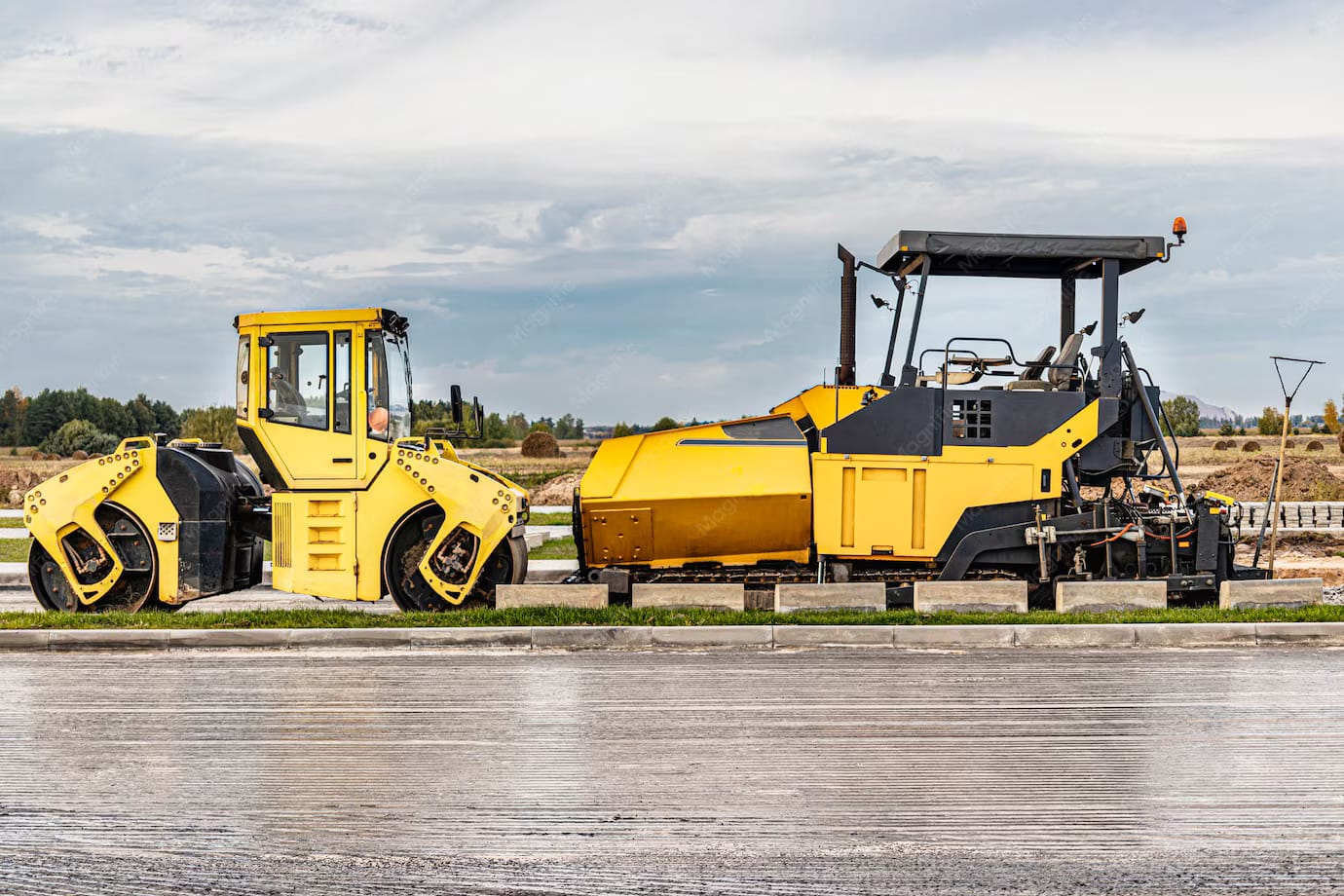
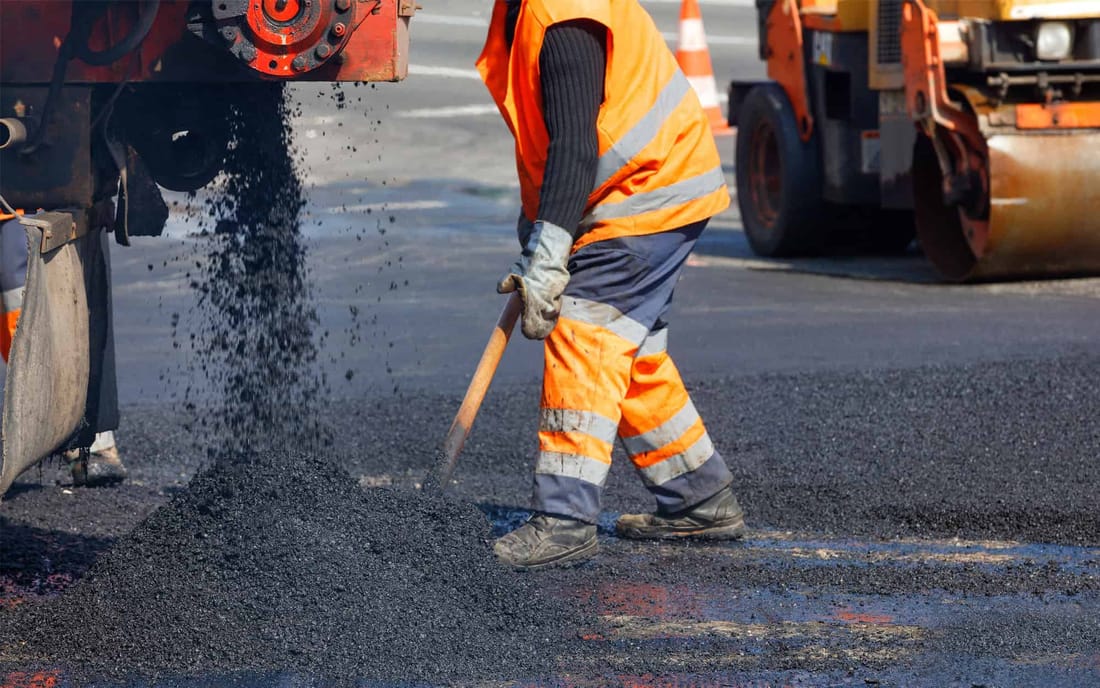
Once the base passes inspection, we place industrial-grade asphalt in multiple lifts. The lower lifts use a coarser mix that provides structural strength, while the top lift uses a finer surface course that balances durability with a smoother finish for forklifts and pedestrians. Each lift is placed with a paver, then compacted with a combination of steel drum and pneumatic rollers while the mix is within the target temperature window. We monitor mat temperatures and roller passes in real time so joints are tight and density is uniform. The result is a pavement that behaves like a single solid structure instead of a patchwork of weak spots.
Design Options, Thickness, and What Drives Cost
No two industrial sites in Gilbert are identical, so we customize every design. For light industrial parking with occasional box trucks, we might recommend a 3 to 4 inch asphalt section over 6 inches of base. For distribution centers that see daily semi traffic and container stacking, thickness can increase to 5 to 7 inches of asphalt over 8 to 12 inches of base in the driving lanes.
Cost is driven mainly by three factors: total section thickness, the area being paved, and the amount of preparation needed. A clean, well-drained lot that only needs minor grading will cost less per square foot than a yard with poor drainage, buried debris, and saturated subgrade that requires excavation and reconstructions. Night or off-peak work to keep your operations running is also a factor, and we build scheduling into our proposals so there are no surprises.
Material choices matter too. In high-shear areas like tight truck turns near the SanTan Freeway, we often recommend a heavier-duty surface mix that uses harder aggregate and higher asphalt content to resist shoving. Around fuel stations or areas where oils and solvents are common, we discuss using thicker surface courses and more frequent sealcoating because petroleum products can soften asphalt binders over time. During your estimate, Precision Asphalt Gilbert walks you through a simple pavement section diagram so you can see exactly what you are buying and how each layer affects performance and price.
Common Industrial Pavement Problems and How We Prevent Them
Most of the expensive asphalt failures we see around Gilbert industrial sites are not accidents. They come from predictable causes that can be designed around. Rutting in truck lanes usually comes from a weak base or a mix that is too soft for the load and temperature. Alligator cracking near dock doors often traces back to poor compaction at the joints and concentrated loading at trailer landing gear.
Our approach is to address those risks during design and construction instead of after the fact. We thicken pavement sections in known high-stress zones, then tie them smoothly into adjacent areas to avoid abrupt transitions that can crack. We pay special attention to longitudinal and transverse joints, heating and compacting them properly so they do not open up early. Around trench crossings for utilities, we extend cuts beyond the immediate trench, rebuild the base to full depth, and stagger joints so you do not end up with long, straight cracks right over the pipe.
Drainage is another major concern in the Metro Phoenix area. Even though rain is infrequent, a single storm can put standing water on a flat lot for hours, then the sun bakes that moisture into the asphalt. Over time this accelerates oxidation and surface raveling. We design industrial pavements with positive slope to inlets or swales, confirm elevations with laser levels, and construct concrete valley gutters or flumes where needed. For very large yards, we may suggest segmenting the pavement into drainage “sheds” so water is collected and moved quickly off the surface.
Why Local Experience Matters for Heavy-Duty Paving in Gilbert
Industrial paving in Gilbert means planning around heat, dust, and your operating schedule. Precision Asphalt Gilbert has completed projects for warehouses, light manufacturing, and service yards across town, so we know how to phase work so you can keep trucks moving. We can pave in sections, provide temporary access routes, and schedule high-impact work for nights or weekends when needed.
Local experience also matters for permitting and coordination. We understand Town of Gilbert requirements for approaches, fire lanes, and ADA access that may cross industrial pavements. If your project ties into a public street or needs revised drainage, we coordinate with the necessary departments and, when required, local engineers to ensure your design will be approved.
Finally, we stay realistic about the life cycle of a heavy-duty asphalt surface. During our proposal, we outline likely maintenance over a 10 to 20 year window, such as crack sealing, sealcoating where appropriate, and future overlays in the heaviest use lanes. This helps you budget accurately and compare asphalt to alternative options like concrete in critical areas. Our goal is to give you straightforward information and a pavement structure that matches how your site really operates, not a one-size-fits-all plan that looks cheaper up front and fails early in Gilbert’s demanding conditions.